
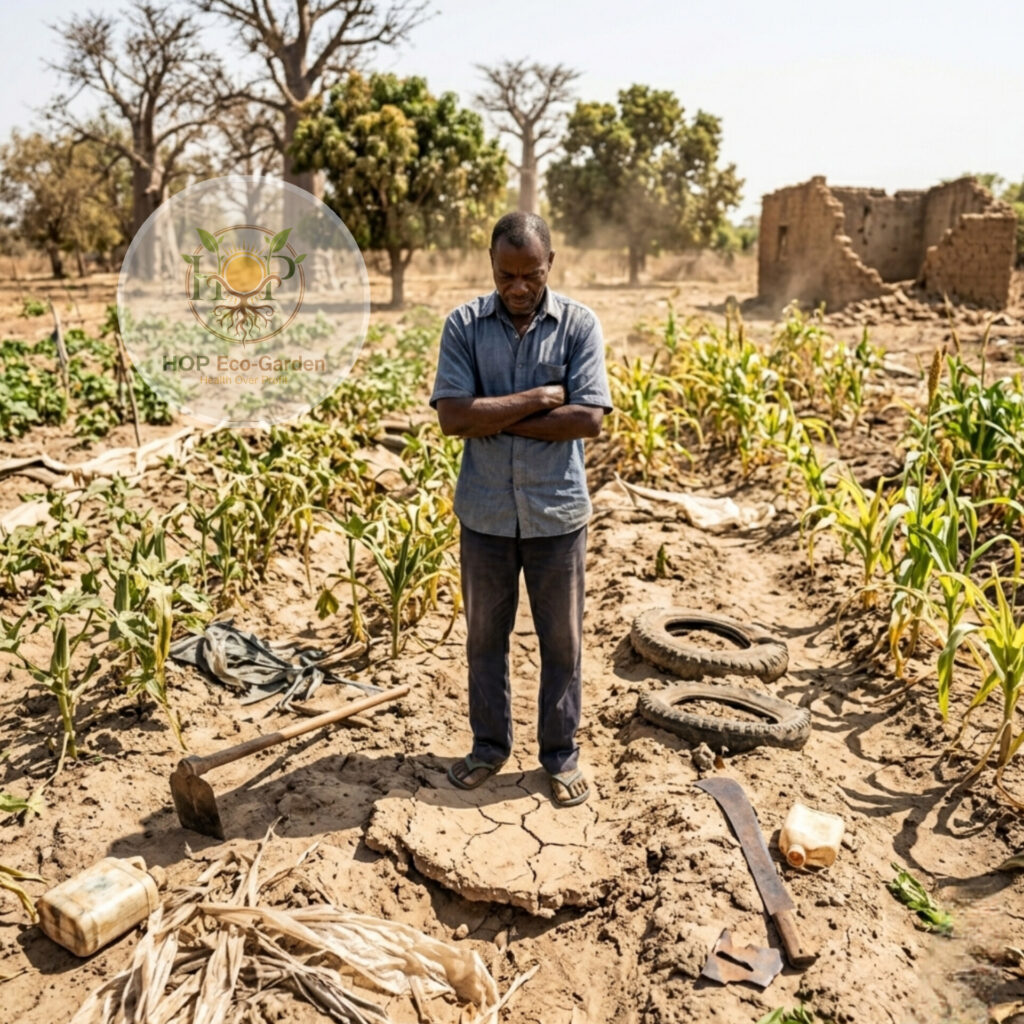
There are farmers who wake up early every morning.
They work under heat.
Carry water.
Clear weeds.
Plant crops.
Fight pests.
Spend money.
Repeat the same cycle every season.
Yet somehow, the struggle continues.
The farm remains stressful.
Problems keep repeating.
Harvests stay inconsistent.
Pressure keeps growing.
This confuses many farmers because they believe hard work alone should automatically create stability.
But farming has a hidden truth many people learn too late:
Hard work without systems eventually creates exhaustion.
Because farming is not only about effort.
It is also about structure.
What Does “Farming System” Actually Mean?
When people hear the word “system,” they often imagine something complicated or expensive.
But a farming system simply means:
A structured way of organizing the farm so things work together instead of creating constant chaos.
A system helps answer questions like:
- How will water be managed?
- Where will seeds come from?
- How will soil fertility improve?
- What crops fit the environment?
- How will problems be monitored?
- What happens during dry periods?
Without systems, farming becomes random.
And random farming often creates repeated struggle.
The Difference Between Random Farming and Systematic Farming
This difference is extremely important.
Random Farming
Random farming usually looks like:
- planting without planning
- reacting only when problems appear
- buying things urgently every season
- inconsistent watering
- poor organization
- no long-term thinking
The result:
- stress
- repeated mistakes
- wasted resources
- instability
Systematic Farming
Systematic farming focuses on:
- planning
- observation
- organization
- gradual improvement
- resource management
Problems still happen.
But systems help reduce unnecessary pressure.
That changes everything long term.
Why Many Small Farms Struggle
Many small-scale farms struggle not because farmers are lazy.
Most small farmers work extremely hard.
The problem is usually deeper:
- no systems
- no structure
- no continuity
- no long-term planning
This creates constant reaction-based farming.
The farm becomes controlled by emergencies instead of organization.
A Realistic Example in The Gambia
Imagine two organic farmers.
Farmer A
Every season:
- plants randomly
- has no watering schedule
- buys seeds at the last minute
- has poor soil planning
- reacts emotionally to problems
The result:
- stress increases
- water gets wasted
- crops suffer
- costs remain unpredictable
Farmer B
Begins building simple systems:
- stores some seeds
- organizes watering times
- improves soil gradually
- keeps simple farm records
- plants according to realistic capacity
Farmer B still faces challenges.
But over time:
- the farm becomes more stable
- pressure decreases
- decision-making improves
- sustainability becomes more realistic
The difference is not luck.
It is systems.
Farming Without Water Systems Creates Constant Stress
One of the biggest causes of struggle in warm climates is poor water organization.
In places like The Gambia:
- heat increases evaporation
- water access may be limited
- dry periods create pressure
Without water systems:
- watering becomes inconsistent
- crops become stressed
- labor increases unnecessarily
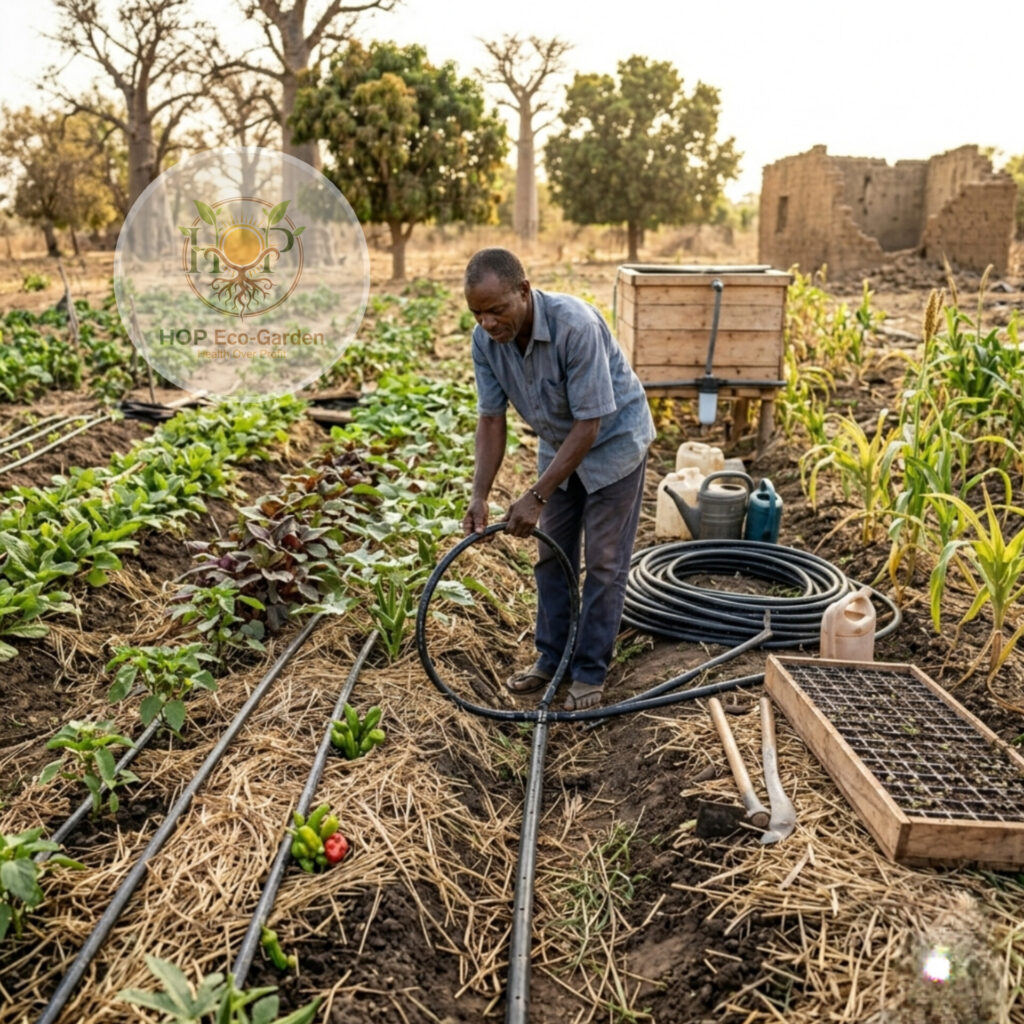
A water system does not need to be expensive.
Even simple improvements help:
- watering schedules
- mulching
- proper timing
- organized storage
- gradual infrastructure improvement
Systems reduce chaos.
Soil Systems Matter More Than Many Farmers Realize
Many farmers focus only on planting crops.
But sustainable farming depends heavily on soil systems.
Without soil improvement systems:
- fertility declines
- water retention weakens
- dependency increases
- crop stress increases
Strong soil systems include:
- composting
- mulching
- organic matter recycling
- soil observation
- gradual improvement
Healthy soil creates stronger farming stability over time.
Seed Systems Reduce Dependency
One hidden source of farming stress is restarting from zero every season.
Farmers without seed systems often:
- depend fully on outside suppliers
- face rising costs
- experience uncertainty
Even basic seed-saving systems help improve continuity.
This does not happen instantly.
But gradual seed preservation creates resilience over time.
Observation Is a Farming System Too
Many people underestimate observation.
Good farmers constantly observe:
- crop behavior
- soil moisture
- weather patterns
- pest activity
- plant stress signs
Observation helps farmers respond early instead of reacting too late.
This reduces avoidable problems.
Record Keeping Is Extremely Powerful
Some farmers repeat the same mistakes because nothing is documented.
Simple records help track:
- planting dates
- crop performance
- watering patterns
- soil improvements
- seasonal changes
This creates learning over time.
Without records, valuable experience is often forgotten.
Common Mistakes Farmers Make Without Systems
These mistakes are extremely common.
Mistake 1 — Expanding Too Fast
Many beginners try growing too many crops immediately.
This creates:
- management problems
- watering pressure
- poor organization
Strong systems usually grow gradually.
Mistake 2 — Planting Without Planning
Planting emotionally instead of strategically often creates problems later.
Farmers should consider:
- water availability
- labor capacity
- climate conditions
- realistic maintenance ability
Mistake 3 — Ignoring Infrastructure
Some farmers focus only on crops while ignoring:
- fencing
- water access
- storage
- protection systems
Infrastructure matters more than many people realize.
Mistake 4 — Reacting Instead of Observing
Many problems become worse because farmers wait too long before noticing them.
Observation is one of the most valuable systems on a farm.
Mistake 5 — Depending Entirely on Outside Inputs
Heavy dependency creates vulnerability.
Strong systems gradually improve resilience and continuity.
Practical Steps to Build Better Farm Systems
You do not need a perfect farm immediately.
Strong systems are built gradually.
Step 1 — Start With Water Organization
Water is one of the most important systems.
Improve:
- watering consistency
- timing
- storage
- moisture retention
This reduces pressure significantly.
Step 2 — Build Soil Slowly
Focus on:
- compost
- mulch
- organic matter
- soil protection
Healthy soil improves stability long term.
Step 3 — Keep Simple Farm Records
Even basic notes help:
- planting dates
- weather observations
- crop behavior
- harvest outcomes
Small information becomes valuable over time.
Step 4 — Organize the Farm Space
Structure matters.
Organized spaces reduce:
- wasted movement
- confusion
- inefficiency
Simple organization improves workflow greatly.
Step 5 — Grow Gradually
Do not rush expansion.
Strong farms usually develop step by step.
Slow growth often creates stronger long-term systems.
Sustainable Farming Is About Stability
Many people chase:
- quick harvests
- rapid expansion
- fast results
But sustainable farming focuses on:
- continuity
- resilience
- organization
- long-term thinking
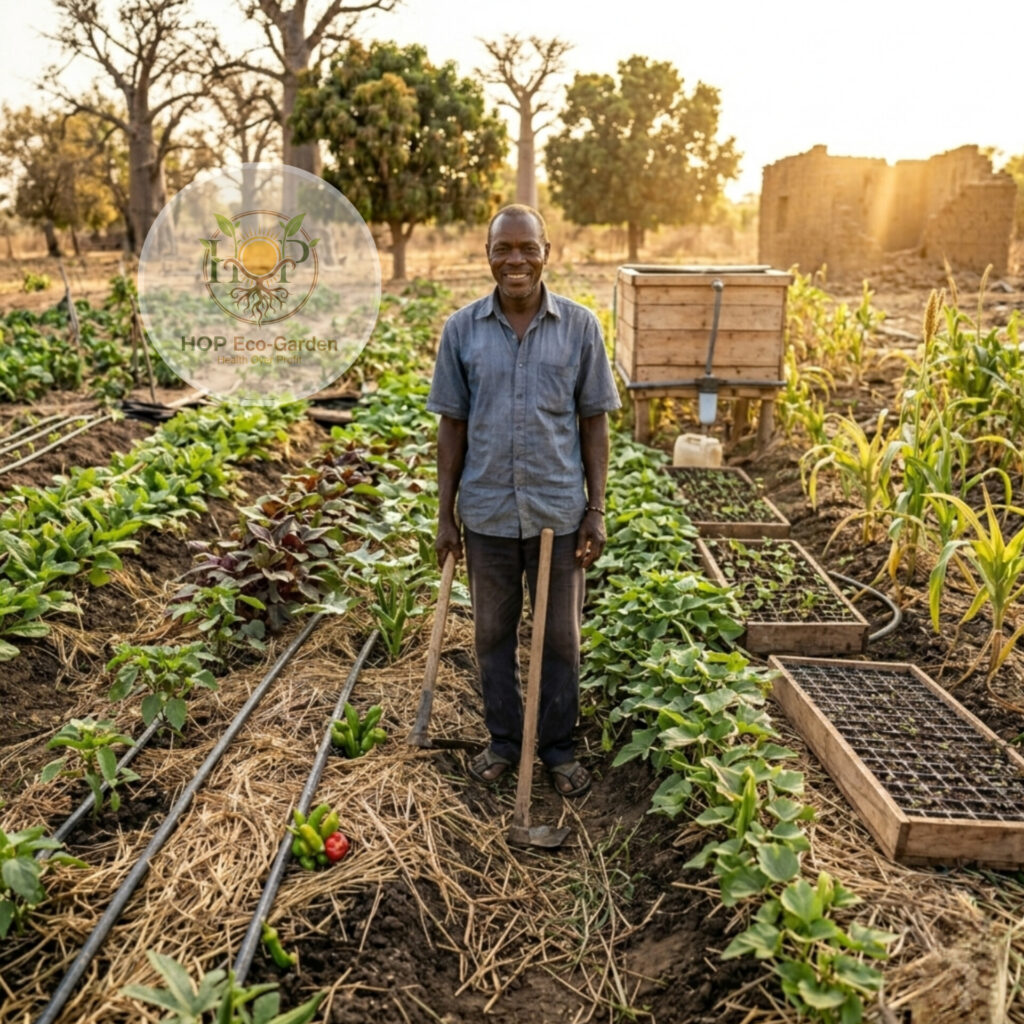
Without systems, farming becomes exhausting.
With systems, farming becomes more manageable and stable over time.
Why This Matters for the Future
Climate conditions are becoming more difficult.
Resources are becoming more expensive.
Farming pressure is increasing in many places.
That is why systems matter more than ever.
Farmers who build systems gradually improve:
- resilience
- adaptability
- long-term survival
Systems protect farms from unnecessary instability.
Strong Farms Are Built, Not Rushed
One important lesson in organic gardening is this:
Strong farms are not created instantly.
They are built slowly through:
- observation
- planning
- structure
- patience
- consistency
Even small systems matter.
Small improvements eventually create major changes.
Conclusion: Farming Needs More Than Hard Work
Hard work is important.
But hard work alone is not enough.
Without systems:
- stress increases
- mistakes repeat
- resources get wasted
- farming becomes unstable
But when farmers build systems gradually:
- decisions improve
- pressure reduces
- resilience grows
- sustainability becomes realistic
Farming success is not only about how hard a person works.
It is also about how intelligently the farm is organized.
Because in the end, sustainable farming is not built on chaos.
It is built on systems.