
Many small-scale farmers know this feeling.
The rains are approaching.
The land is ready.
But before planting can even begin, there is already pressure.
You need seeds.
So the search begins again:
- checking markets
- asking suppliers
- comparing prices
- hoping quality seeds are available
- worrying about whether prices increased again
For many farmers, this cycle repeats every single season.
And after years of farming this way, something dangerous quietly develops:
Dependency.
Not dependency on farming itself —
but dependency on constantly buying the ability to farm.
That is the hidden cost many people never talk about.
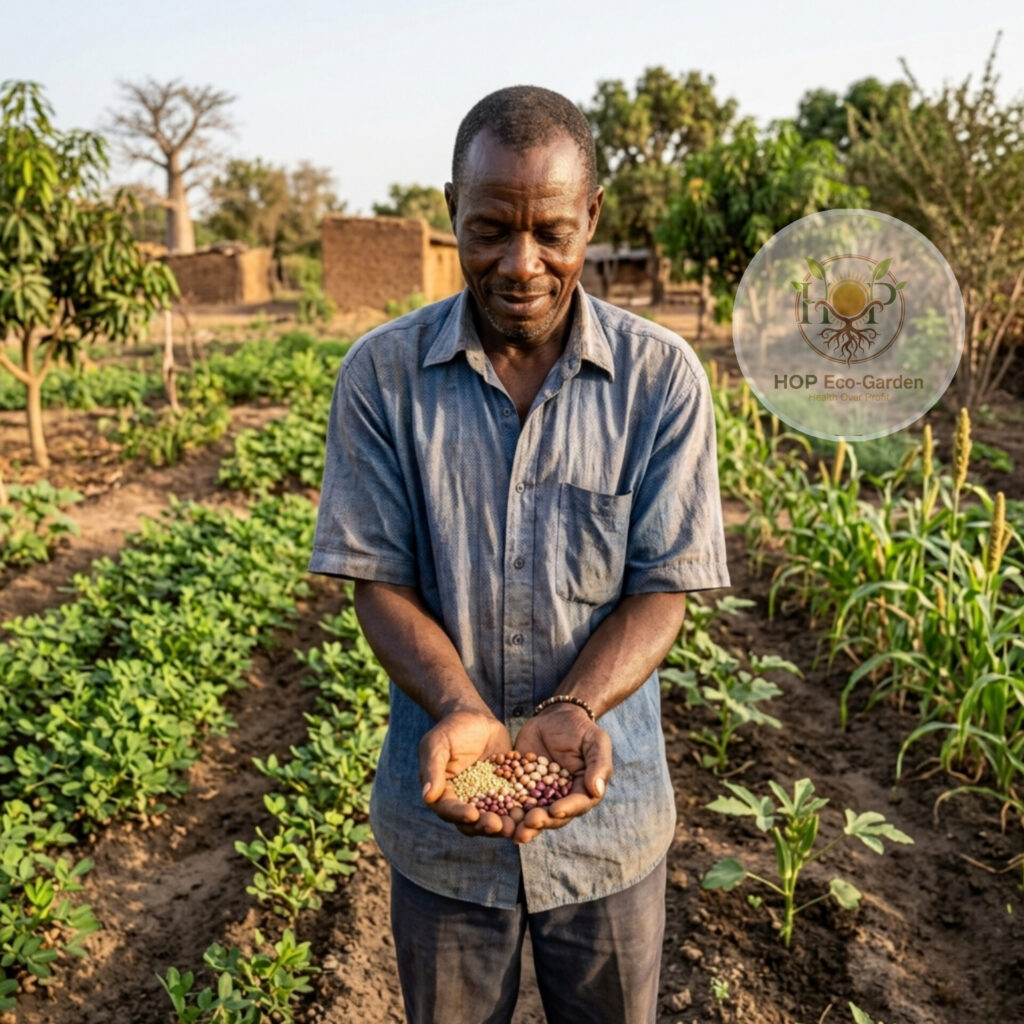
Seeds Are Not Just Products
One of the biggest mistakes modern farming systems created is turning seeds into something farmers constantly purchase instead of something farmers preserve.
Historically, many farming communities survived because seeds were part of the farming system itself.
Farmers:
- selected healthy plants
- preserved seeds
- exchanged seeds locally
- adapted crops over generations
Seeds represented continuity.
Today, many farmers have been pushed into a cycle where every season starts with spending money before planting even begins.
This creates hidden pressure that grows slowly over time.
The Real Hidden Costs Farmers Rarely Calculate
When people think about seed costs, they usually think only about money.
But the real cost goes much deeper.
1. Financial Pressure Every Season
Imagine a small farmer planting:
- tomatoes
- peppers
- onions
- okra
- watermelons
Every season requires purchasing seeds again.
Even if the cost seems manageable once, repeated spending every season creates long-term financial strain.
Now add:
- fertilizer costs
- water costs
- transport
- labor
- pest management
The pressure increases quickly.
For small-scale farmers with limited resources, recurring seed purchases become part of a permanent financial cycle.
2. Loss of Farming Independence
This is one of the biggest hidden dangers.
If a farmer cannot plant without buying seeds first, farming becomes dependent on external supply systems.
What happens if:
- seeds become expensive?
- supply chains fail?
- quality decreases?
- certain varieties disappear?
The farmer loses control.
True sustainability requires some level of continuity and resilience.
3. Loss of Local Adaptation
Locally adapted seeds often perform better because they slowly adjust to:
- local climate
- soil conditions
- rainfall patterns
- heat stress
When farmers repeatedly replace seeds with outside varieties every season, adaptation continuity becomes weaker.
This is especially important in warm climates like The Gambia where:
- heat is intense
- water can be limited
- soil conditions vary
Local adaptation matters more than many people realize.
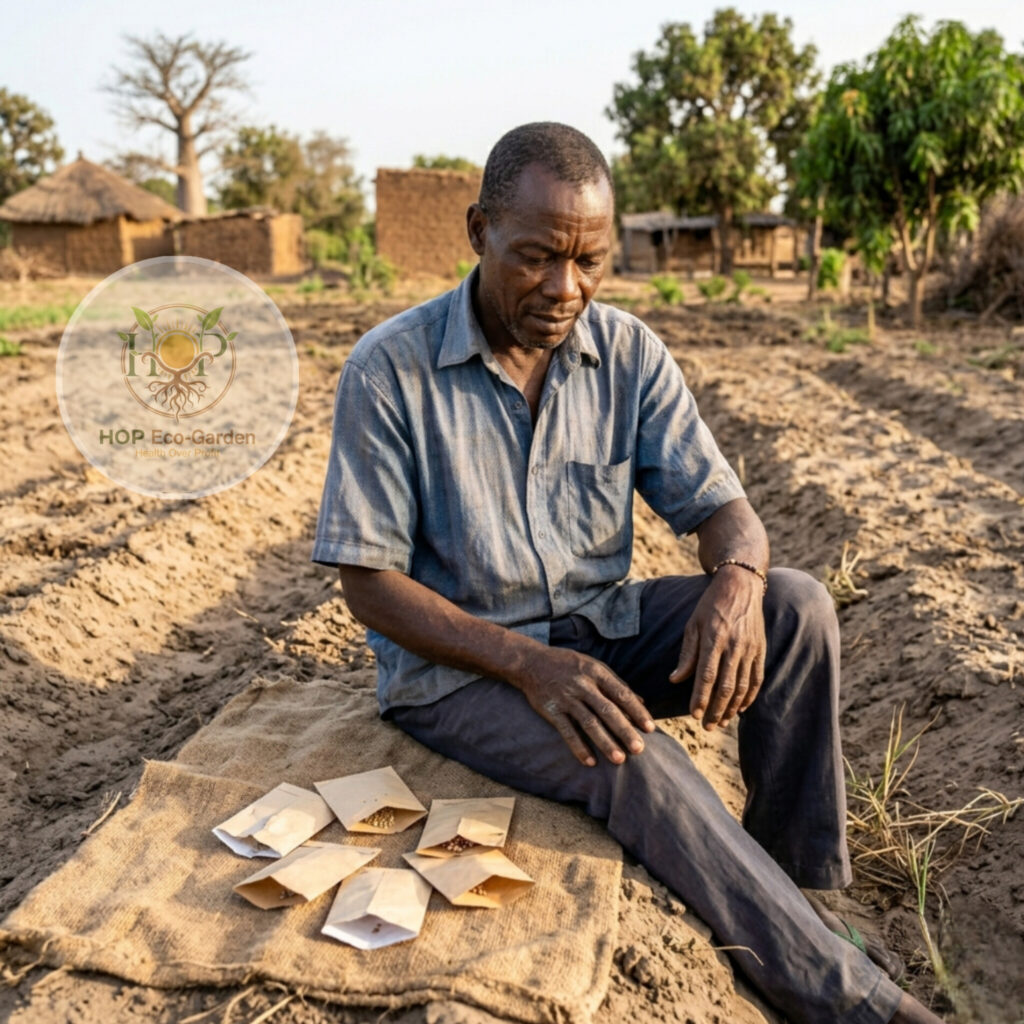
The Psychological Pressure Nobody Talks About
Dependency also creates mental pressure.
Every planting season becomes uncertain.
Questions appear:
- Will I afford seeds this year?
- Will seeds arrive on time?
- Will they germinate properly?
- Will prices increase again?
Instead of farming feeling stable, it begins to feel unpredictable.
Long-term sustainability is not only physical.
It is also mental.
A strong farming system should reduce unnecessary pressure where possible.
How Traditional Farming Systems Were Different
In many traditional farming communities, seeds were treated as part of the harvest itself.
After harvest:
- farmers selected strong plants
- seeds were dried carefully
- seeds were stored properly
- future planting was already partially secured
This created continuity.
The harvest was not only food.
It was also the future.
That mindset is extremely important.
Seed Sovereignty Is About Stability
Many people misunderstand seed sovereignty.
It is not about isolation.
It is about resilience.
It means farmers gradually build the ability to:
- preserve some seeds
- reduce total dependency
- maintain continuity
- protect future planting cycles
This does not happen overnight.
But every small step matters.
A Realistic Scenario in The Gambia
Imagine two small farmers.
Farmer A
Every season:
- buys all seeds again
- depends fully on outside supply
- has no seed storage system
- starts from zero every year
Farmer B
Over time:
- learns seed selection
- preserves some local seeds
- stores seeds carefully
- reduces some seasonal purchasing pressure
Farmer B may still buy some seeds occasionally.
But Farmer B is gradually building resilience.
That difference becomes more important every year.
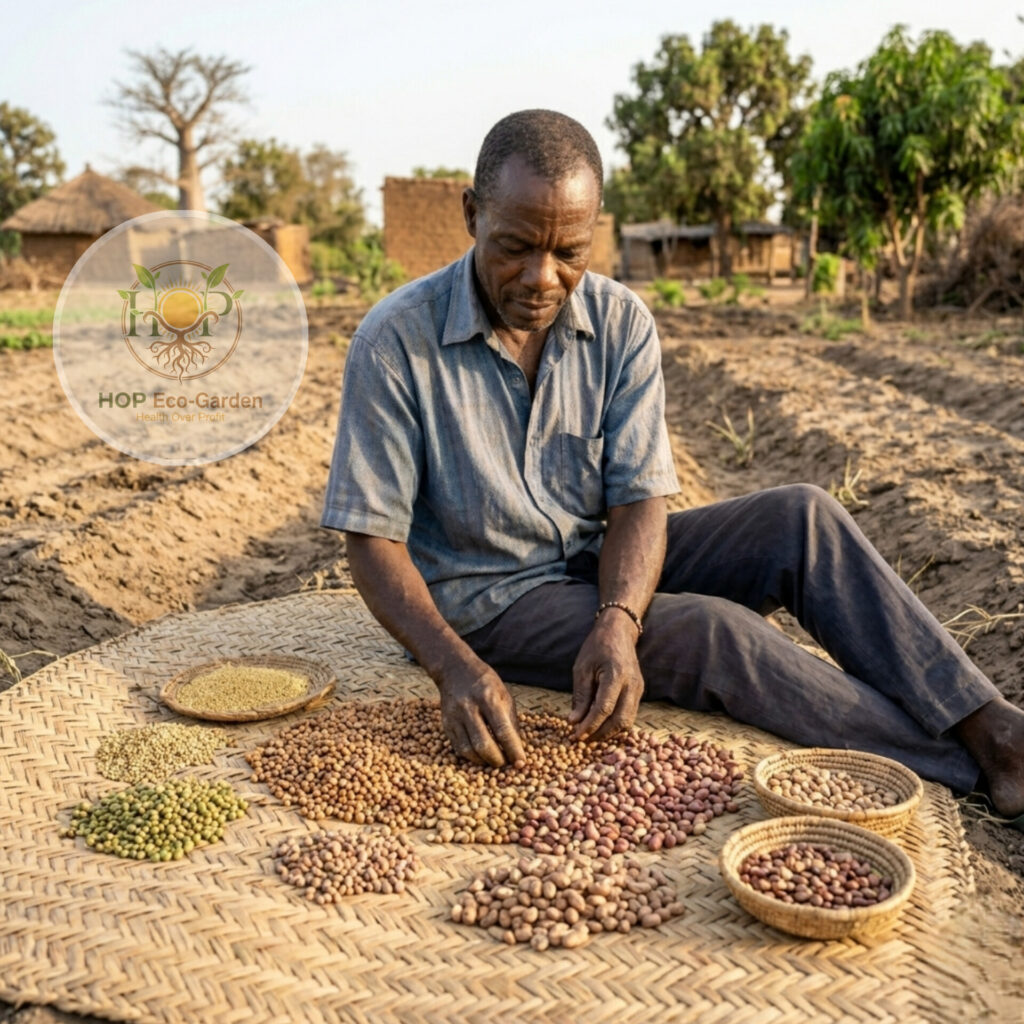
Common Mistakes Farmers Make With Seeds
Building seed independence requires careful thinking.
Many beginners make avoidable mistakes.
Mistake 1 — Saving Seeds From Weak Plants
Not every plant should provide future seeds.
Farmers should select:
- healthy plants
- strong growth
- good resilience
- disease resistance
Weak plants often pass weakness forward.
Mistake 2 — Poor Seed Storage
Even good seeds can fail if stored badly.
Common problems:
- moisture
- heat exposure
- pests
- poor ventilation
Good storage matters.
Mistake 3 — Thinking Only One Season Ahead
This is extremely common.
Many farming decisions focus only on:
- current planting
- immediate harvest
- short-term output
But sustainable farming requires longer thinking.
Mistake 4 — Ignoring Local Conditions
Not every seed performs equally everywhere.
Climate matters.
Soil matters.
Water availability matters.
Adaptation matters.
Practical First Steps Toward Seed Independence
This does not require becoming completely independent immediately.
Start gradually.
Step 1 — Observe Your Strongest Plants
During harvest:
- identify healthy plants
- observe disease resistance
- monitor consistency
These plants may be useful for future seed saving.
Step 2 — Learn Proper Drying
Seeds should dry properly before storage.
Moisture is one of the biggest enemies of long-term seed quality.
Step 3 — Start Small
Do not try saving every seed immediately.
Start with:
- okra
- peppers
- local vegetables
- crops that adapt well locally
Build experience gradually.
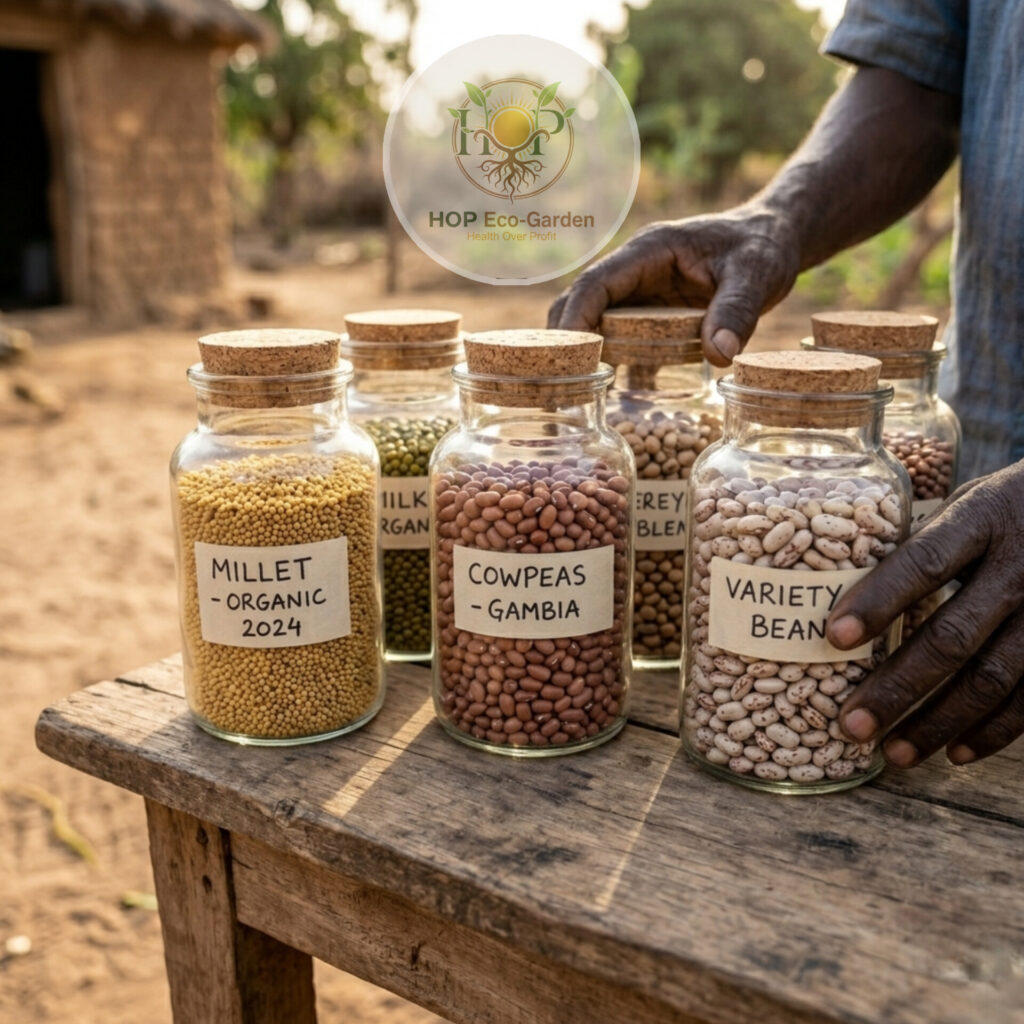
Step 4 — Improve Storage
Use:
- dry containers
- cool spaces
- proper labeling
Simple improvements matter.
Step 5 — Keep Learning
Seed systems improve through:
- observation
- experience
- testing
- patience
This is a long-term process.
Sustainable Farming Is About Systems
One of the most important lessons in organic farming is this:
Everything is connected.
Healthy farming systems involve:
- soil health
- water management
- seed continuity
- observation
- long-term thinking
Seeds are not separate from sustainability.
They are one of its foundations.
Why This Conversation Matters More Today
Modern farming systems often focus heavily on:
- speed
- short-term yield
- seasonal purchasing cycles
But many small farmers are quietly struggling under increasing costs and dependency.
That is why seed awareness matters.
Not because it is trendy.
But because long-term resilience matters.
Especially in regions where:
- resources are limited
- climates are difficult
- farming is essential for livelihoods
A Healthier Long-Term Direction
The goal is not perfection.
The goal is progress.
Every farmer may not become fully seed-independent immediately.
But even small improvements can help:
- reduce pressure
- improve resilience
- strengthen continuity
- support sustainability
Long-term systems are built gradually.
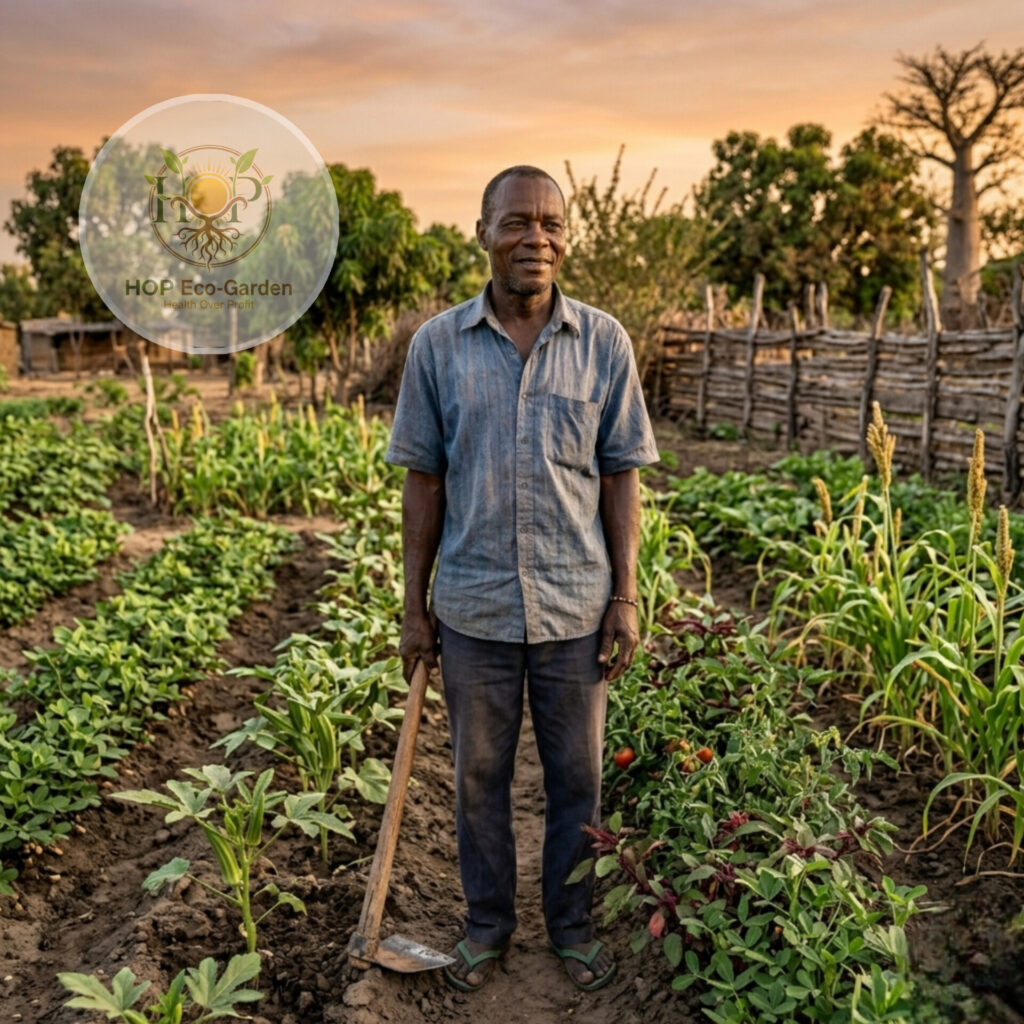
Conclusion: The Harvest Is Also the Future
One of the most dangerous farming habits is thinking only about the current season.
True sustainability requires longer thinking.
Seeds are not just part of this year’s harvest.
They are part of next season.
And the season after that.
The hidden cost of buying seeds every season is not only financial.
It is also:
- dependency
- vulnerability
- instability
- loss of continuity
But farmers can gradually move toward stronger systems through:
- observation
- preservation
- planning
- patience
Sustainable farming is not built in one season.
It is built over time.
And sometimes, the future of a farm begins with how carefully a farmer treats a single seed.